
GPS was the first technology most fleets adopted, and for good reason: knowing where a vehicle is removes a great deal of uncertainty. But location is a single data point about a complex, expensive and often risky asset. The Internet of Things widens the picture.
What IoT adds to location
With sensors, telematics devices and connected cameras on board, an operator can know not just where a vehicle is but:
- How it is being used — trips, idling, loads and working hours
- How the vehicle is performing — engine condition, diagnostics and fault codes
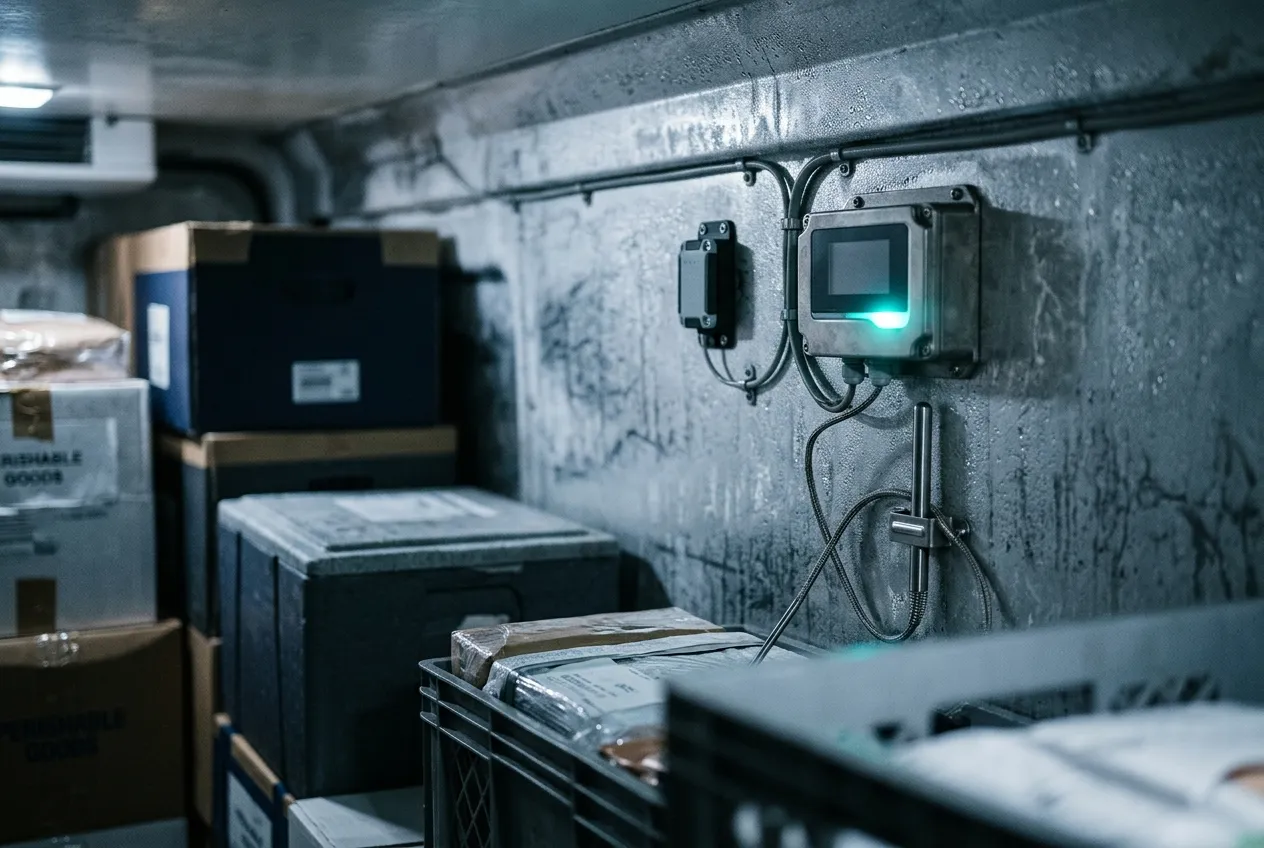
- Temperature inside refrigerated compartments, continuously logged for compliance
- Fuel consumption and anomalies that indicate theft or waste
- Driver behaviour — harsh events, speeding and fatigue indicators
- Door, cargo and asset status — opened, moved, connected or missing
- Camera events linked to the exact time and place they happened
- Whether an asset is being utilised efficiently, or sitting idle
The connected transportation ecosystem
The value of IoT is not in any single sensor. It is in the ecosystem that forms when the pieces are connected:
Vehicle + Driver + Sensors + Camera + Software + AI + Business Systems
That last element is where many deployments stop short. A temperature alert that lives only inside a fleet platform is useful; a temperature alert that updates the order status in the ERP, notifies the customer and triggers a quality-control task is operational. The same is true for proof of delivery flowing into Shopify or SAP, driver hours flowing into HR and payroll, or vehicle faults flowing into the maintenance system.
Integration is the hard part
Devices, platforms and enterprise systems rarely come from the same supplier, and each has its own protocols and APIs. The organisations that get IoT right treat it as an integration project, not a hardware purchase: define the requirement, select the right devices and platforms for it, and build the connections that turn signals into actions.
A practical example
Consider a distribution company moving chilled goods across the UAE. GPS alone confirms that a truck reached the customer. An IoT deployment adds a temperature probe in the cargo area, a door sensor, a fuel-level sensor and a driver-identification reader, all reporting through a single telematics device. The fleet platform raises an alert the moment the compartment drifts out of range; the integration layer records the full temperature history against the delivery in the ERP; the customer receives a compliance report automatically; and the maintenance team sees that the refrigeration unit on that vehicle has struggled on three consecutive hot afternoons. Nothing in that chain is exotic — but each link has to be chosen, installed, configured and connected correctly for the whole to work.
The same pattern applies to construction equipment, rental vehicles, waste collection and passenger transport. The sensors differ; the architecture does not.
This is the core of what Wexoz does as a technology-agnostic systems integrator — bringing together IoT devices, telematics, CCTV, fleet platforms and business systems into one connected operation, without forcing a customer into a single product.
Have a related requirement? Let's design the right solution for it.