
From Order to Doorstep: How AI and Automation Are Reshaping Last-Mile Delivery
Follow the delivery journey step by step — and see where automation and AI are turning delivery software into an AI delivery control tower.
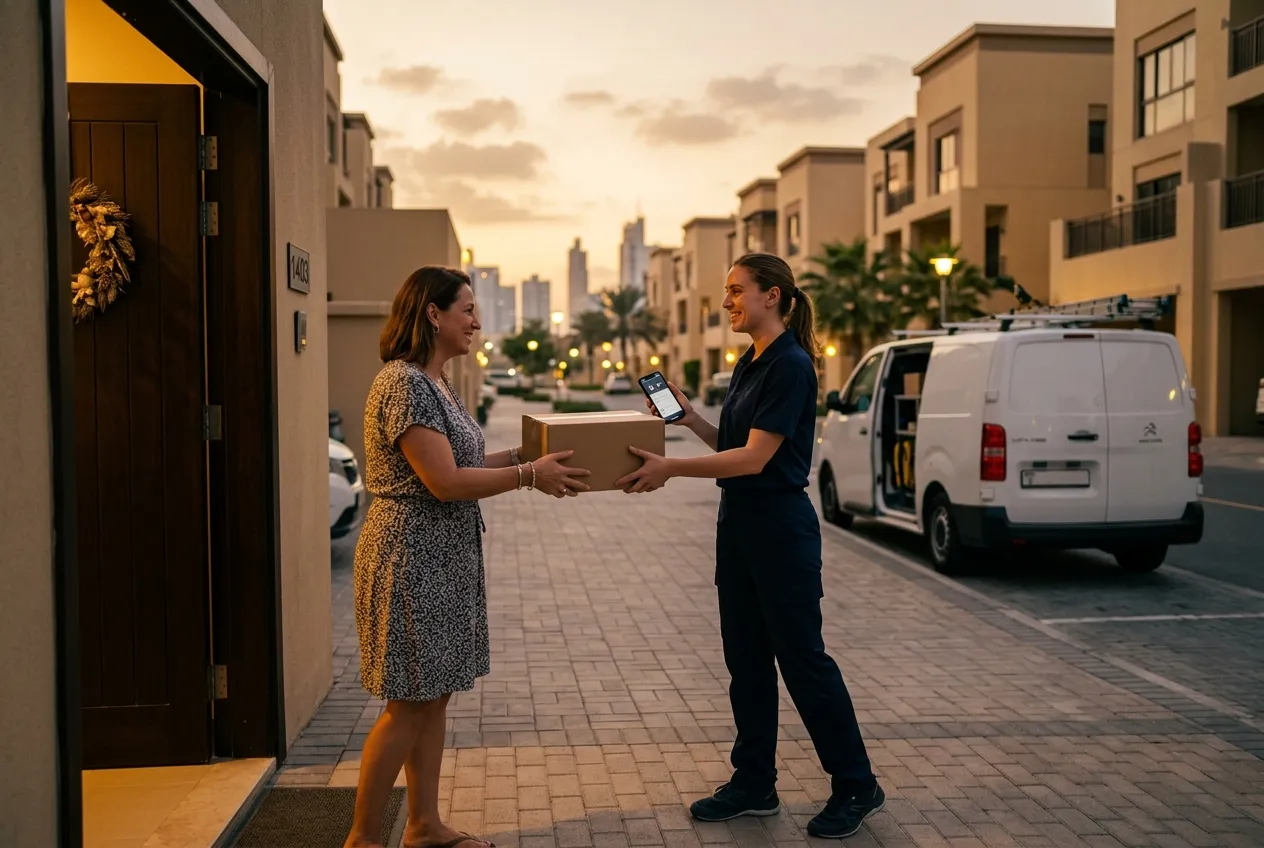
Last-mile delivery is where customer expectations and operating costs collide. Every order follows the same journey — Order → Planning → Dispatch → Driver → Route → Delivery → Proof of Delivery → Customer — and at each step technology is quietly replacing manual effort.
Where technology fits in the journey
- Order — automated order ingestion from e-commerce platforms, ERP and marketplaces.
- Planning — intelligent order allocation by zone, time window, vehicle type and capacity.
- Dispatch — route optimisation and driver assignment in minutes rather than hours.
- Driver — a mobile application with the manifest, navigation and customer instructions.
- Route — real-time tracking, dynamic ETAs and automatic handling of delivery exceptions.
- Delivery — digital proof of delivery with photo, signature or OTP.
- Customer — proactive notifications at dispatch, en route and on completion.
- Review — performance analytics across drivers, zones, failed attempts and cost per drop.
The AI delivery control tower
Automating each step is valuable, but the more interesting development is what becomes possible when the whole journey is connected. Imagine an operations manager who can ask:
- Which deliveries are at risk of missing their SLA today?
- Why are these 18 orders delayed?
- Can I move these deliveries to another driver?
- Which areas are creating the most failed deliveries?
- How many vehicles do I actually need tomorrow?
This moves the conversation from delivery software to AI-assisted logistics operations.
An AI delivery control tower does not replace dispatchers. It gives them answers that previously required hours of spreadsheet work, and it raises exceptions early enough to fix them. The precondition is integration: order data, telematics, driver apps and customer systems have to be connected before AI can reason across them.
Building towards it
Most operators reach this in stages — automating dispatch and proof of delivery first, connecting the fleet and the business systems next, and layering analytics and AI on top. Wexoz supports every stage through logistics automation, IoT fleet management and transportation AI, integrating the platforms that fit each operation rather than a single fixed product.
Common pitfalls to avoid
The most frequent mistake is automating a broken process. If address data is poor, route optimisation produces confident but wrong plans; if drivers bypass the app, proof of delivery and ETAs collapse. Fix data quality and driver adoption first. The second mistake is treating the fleet and the orders as separate worlds: dispatch software that cannot see vehicle location, fuel or driver hours will keep making promises the fleet cannot keep. The third is measuring only speed. Cost per drop, first-attempt success rate and customer contact rate tell you whether automation is actually paying for itself.
Handled well, the journey from order to doorstep becomes something an operations team can see end to end, intervene in early and improve week by week — which is the real promise of AI in last-mile delivery.
Have a related requirement? Let's design the right solution for it.